Automotive fluid lines are changing along with the powertrain architecture around them. Battery-electric vehicles remove many conventional fuel-delivery components, while hybrids retain fuel circuits but introduce longer periods of engine-off operation. At the same time, batteries, inverters, converters, and other high-power electronics require carefully controlled cooling circuits.
This shift gives nylon pipe materials a broader role than fuel transport alone. DEKUMA, a manufacturer of rubber and plastic processing machinery and extrusion systems, provides equipment for multilayer tube production suited to automotive applications, including conventional and new-energy vehicles.
From Fuel Delivery to Thermal Management
The decline of internal-combustion-only vehicles does not mean that polymer tubing is disappearing from automotive systems. Hybrid vehicles still contain fuel tanks, pumps, and delivery circuits, but their operating patterns can differ substantially from those of conventional vehicles. Extended electric-only periods may leave fuel relatively stagnant inside the line, creating material-selection concerns related to extraction, swelling, conductivity, and fuel compatibility.
Electric vehicles create a different fluid-management challenge. Battery packs and power electronics generate heat that must be transferred through dedicated coolant circuits. Arkema identifies PA11 and PA12 as materials used in cooling circuits for BEV and HEV systems, including battery and inverter-converter applications.
Material selection is consequently moving from a single fuel-resistance question toward a wider balance of mechanical and thermal properties. A composite tube can use multiple layers to assign different functions to different parts of the wall, such as fluid compatibility, mechanical support, or barrier performance.
Why PA12 and PA11 Remain Relevant
PA12 has a long history in automotive fluid-transfer applications because of its combination of flexibility, chemical resistance, and mechanical performance. PA11 shares many of these characteristics while offering a different property balance that can be useful in demanding thermal-management environments. Arkema reports PA11 and PA12 applications across both fuel systems and EV cooling circuits, illustrating how long-chain polyamides are being adapted rather than displaced by electrification.
Thermal exposure is one of the major factors separating one grade from another. Battery and inverter cooling circuits operate with water-glycol-based coolants, while the surrounding environment can expose tubing to heat from power electronics and nearby components. Published material data from Arkema show different continuous-temperature capabilities for PA11 and PA12 grades, demonstrating why material selection must be tied to the actual thermal profile instead of relying on the generic word “nylon.”
Mechanical packaging creates another consideration. Battery packs often leave limited room for large-radius hoses, so tubing with suitable flexibility and wall efficiency can support tighter routing. A Korean EV industry case study cited by Arkema describes plastic cooling lines replacing substantially heavier rubber hose constructions, with plastic tubes using thinner walls and occupying less space in high-power-component cooling applications.
How Extrusion Must Adapt to New Fluid Circuits
New-energy applications place greater emphasis on dimensional consistency because the tubing may interface with compact connectors, battery modules, pumps, valves, or thermal-management assemblies. Outside diameter, wall thickness, layer concentricity, and surface quality can all influence how reliably a tube fits into the surrounding system. Multilayer structures add another variable: every layer must remain within its intended position while the finished tube retains the flexibility and mechanical characteristics required by the application.
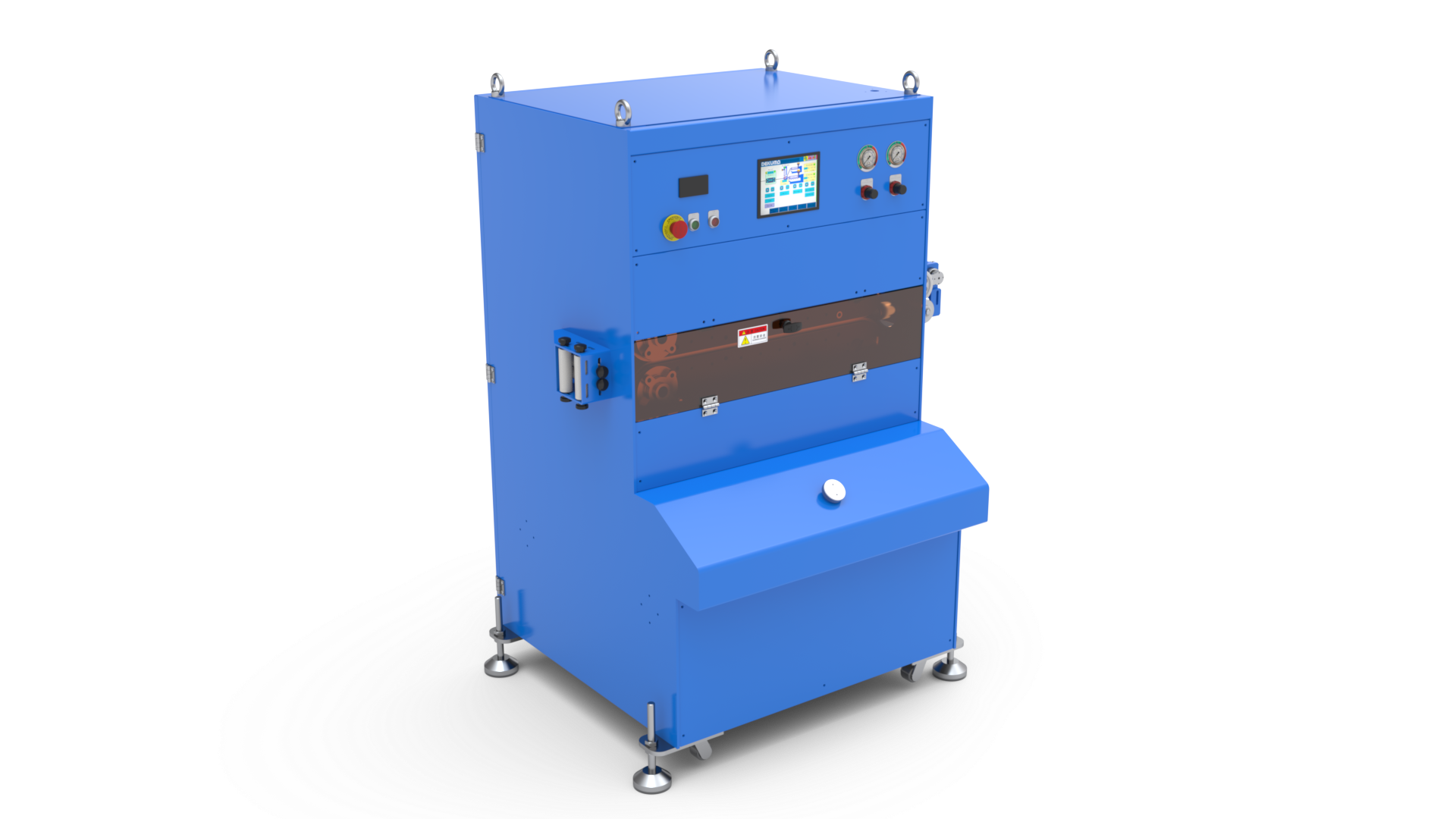
DEKUMA’s Multi-layer Nylon Composite Tube Extrusion Line uses three extruders to form separate inner, middle, and outer layers. Its haul-off unit uses an Inovance servo drive, reaches a maximum speed of 80 m/min, and applies pneumatic adjustment to the belt clamp. Such configuration details matter because stable downstream traction influences how consistently the extruded tube is pulled and dimensionally controlled during production.
Production requirements also vary according to whether the tube is intended for fuel, coolant, air conditioning, braking, or another automotive circuit. A material combination suitable for fuel resistance does not automatically exhibit the same behavior in a long-duration coolant environment. Likewise, the wall structure required for a flexible cooling line may differ from one designed around barrier performance.
The Expanding Role of Tubing in Electric Powertrains
Battery thermal management is becoming one of the clearest new application areas. Batteries operate within preferred temperature ranges, and cooling circuits must move heat away from cells and modules without creating excessive mass or consuming valuable packaging volume. The same principle extends to inverter and converter assemblies, where thermal loads can be significant. Arkema describes PA11 and PA12 as material options for these interconnected cooling systems and highlights their mechanical strength, flexibility, and resistance to cooling media.
The transition also changes what “fuel-system tubing expertise” means. Traditional development concentrated heavily on fuel compatibility, permeation, pressure, and under-hood durability. Electric platforms add coolant compatibility, thermal cycling, tight routing, connection strategy, and interactions with battery-pack architecture. Hybrid platforms sit between the two, retaining fuel circuits while introducing operating conditions associated with partial electrification.
Conclusion
Powertrain electrification is reshaping tubing demand rather than simply reducing it. Conventional fuel circuits may become less prominent in battery-electric vehicles, yet hybrid platforms retain them under new operating patterns, while battery and power-electronics cooling introduce substantial new requirements. Nylon pipe materials such as PA11 and PA12 can consequently serve several different roles, provided their grades, wall structures, and processing conditions correspond to the specific fluid, temperature, mechanical, and packaging environment.
DEKUMA‘s extrusion technology reflects this broader transition by supporting multilayer tube production for both conventional and new-energy automotive systems. The company’s equipment combines multiple extruders with controlled haul-off, allowing manufacturers to develop tube structures around application-specific material combinations. As vehicle architectures continue to diversify, the value of a composite tube increasingly lies in how its layers divide functional duties, turning polymer tubing from a simple fluid conduit into an engineered part of the vehicle’s thermal and powertrain system.

