Industrial equipment manufacturers are continuously searching for drive solutions that provide strong performance while reducing installation space. As automation systems become more compact, the demand for smaller yet more powerful inverter products has increased. A book-size industrial AC drive can address this challenge by combining a narrow structure with advanced control technologies, allowing manufacturers to optimize cabinet layouts without sacrificing motor control capability.
Understanding the Value of High Power Density Inverter Technology
A high power density inverter is designed to deliver greater output capability within a smaller physical structure. This design approach is becoming increasingly important in industrial automation, where control cabinets often need to accommodate multiple electrical components while maintaining efficient thermal management and easy maintenance access.
Traditional drive systems may require larger installation spaces because of their power components and cooling requirements. However, modern inverter designs focus on improving internal component integration, heat dissipation, and control efficiency. These improvements allow manufacturers to achieve higher performance levels within a more compact footprint.
For industrial users, the advantages of a high power density inverter extend beyond saving cabinet space. A smaller drive can help simplify machine design, reduce installation complexity, and support flexible equipment upgrades. This makes compact inverter technology increasingly valuable in applications where space and performance are equally important.
How a Book-Size Industrial AC Drive Supports Efficient Equipment Design
The physical design of an industrial AC drive directly affects how efficiently it can be integrated into automation systems. A book-size structure allows the drive to fit into narrow control cabinets, making it suitable for machinery manufacturers that require optimized internal layouts.
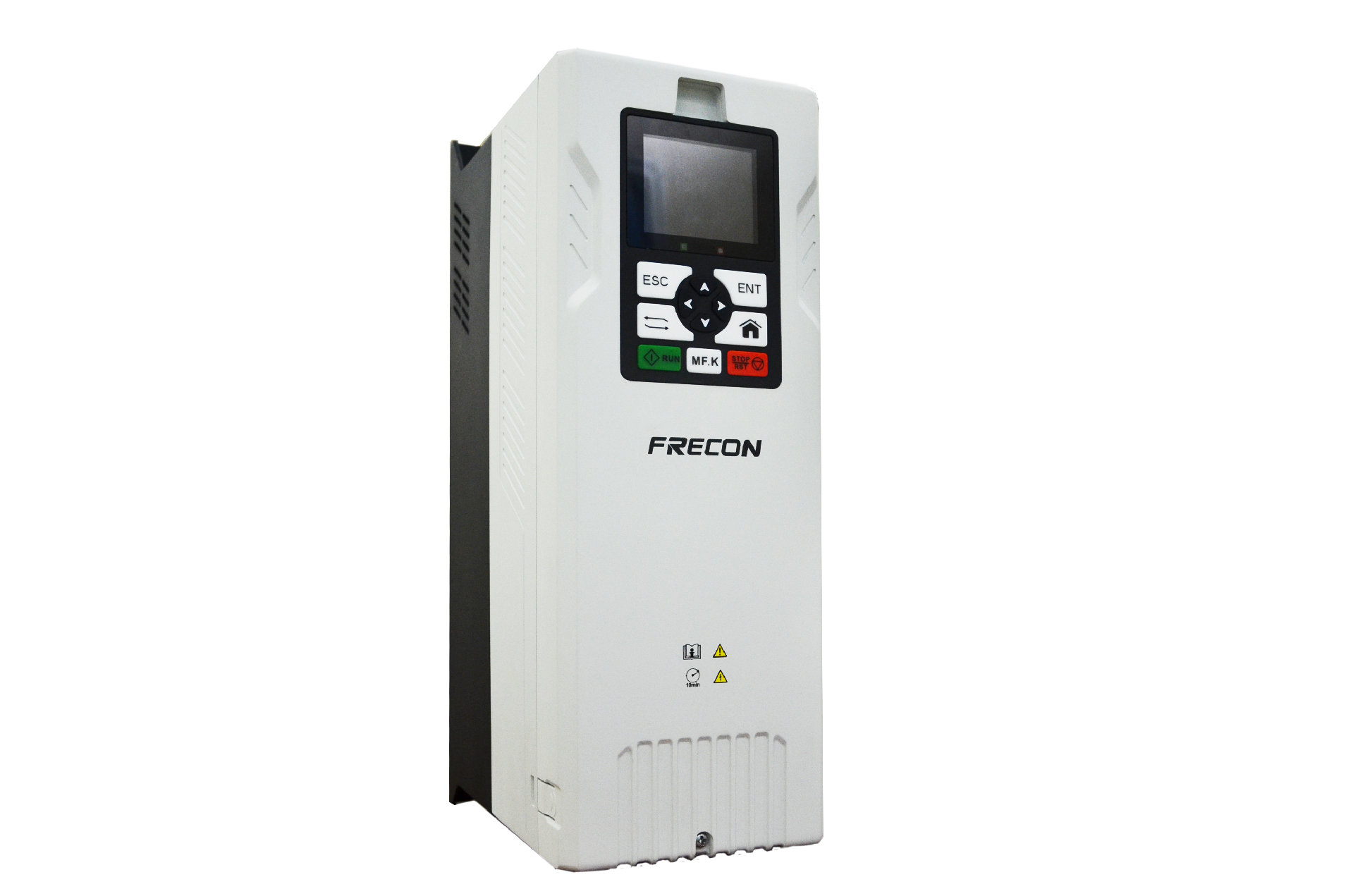
FRECON’s FR30 Series General Vector Inverter demonstrates how compact design and high-performance control can work together. The series features a high power density design while maintaining high performance and quality standards. Positioned as a full-featured product for mid-to-high-end applications, it provides manufacturers with a flexible solution for demanding industrial environments.
A compact structure does not simply mean reduced size. It also reflects careful engineering of electrical components, control systems, and thermal design. When selecting an industrial AC drive, engineers need to consider whether the product can provide reliable operation while meeting the spatial limitations of modern equipment.
Advanced Control Functions Improve Smart Electric Drive Applications
Industrial automation requires precise motor control to achieve consistent production performance. A smart electric drive combines intelligent control methods with drive hardware to improve speed regulation, torque response, and operational stability.
The FR30 Series integrates VC, SVC, and VF control modes, providing flexibility for different application requirements. These control methods allow the inverter to support applications that require high speed accuracy, fast torque response, and reliable low-frequency output performance.
For equipment manufacturers, this flexibility means one drive platform can support various machine configurations. Whether used in manufacturing equipment, material handling systems, or other industrial applications, a smart electric drive can help improve system adaptability and operational efficiency.
High Power Density Inverter Design for Space-Limited Industrial Systems
Space optimization has become an important factor in industrial equipment development. Smaller machines and automated production lines require electrical components that deliver strong functionality without increasing cabinet size.
A high power density inverter helps solve this challenge by improving the relationship between output performance and physical dimensions. Engineers can integrate more functions into compact systems while maintaining reliable motor operation.
The FR30 Series General Vector Inverter is designed for applications where performance requirements are higher than those of basic frequency converters. Its high-performance design supports applications requiring accurate speed control and fast response characteristics. This makes it suitable for users looking for a compact but capable drive solution.
By reducing the space required for drive installation, manufacturers can create cleaner cabinet designs and improve overall machine integration. Compact inverter technology also provides opportunities for easier transportation, installation, and future system expansion.
Selecting the Right Industrial AC Drive for Modern Automation
Choosing an industrial AC drive requires more than evaluating size or output power alone. Engineers must consider control performance, application requirements, environmental conditions, and long-term reliability.
A book-size drive can provide advantages when equipment design requires limited installation space, but it must also deliver sufficient control capability for the application. Features such as multiple control modes, stable low-frequency operation, and accurate speed adjustment are essential factors for demanding industrial systems.
The FR30 Series combines compact construction with advanced control functions, helping manufacturers address the challenges of modern automation. Its built-in VC, SVC, and VF controls provide application flexibility, while its high power density design supports efficient system integration.
For businesses developing industrial machinery, selecting a drive solution that balances size and performance can improve product competitiveness. Compact designs allow manufacturers to develop smaller machines while still meeting customer expectations for operational efficiency and reliability.
Building Future-Ready Automation with Compact Drive Technology
The trend toward smaller and smarter industrial equipment will continue to influence drive technology development. Manufacturers increasingly require solutions that combine intelligent control, compact structures, and strong performance.
A book-size industrial AC drive featuring high power density inverter technology can provide a practical approach for achieving these goals. By maximizing output capability within a limited footprint, such solutions help engineers create more efficient and flexible automation systems.
FRECON’s FR30 Series General Vector Inverter reflects this development direction by combining compact engineering with advanced control capabilities. With VC, SVC, and VF control functions, along with a high power density design, it offers manufacturers a reliable option for applications requiring precise control and efficient space utilization. As industrial systems continue evolving, compact and intelligent drive technologies will remain important tools for improving automation performance.