Industrial servo systems and three-phase solar inverters require instantaneous response to dynamic electrical transients. In high-power conversion topologies, a fraction of a microsecond of phase jitter can induce harmonic distortion, excessive switching losses, and localized thermal breakdown within power stages.
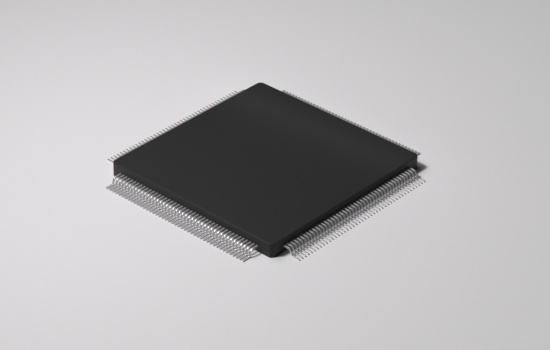
Achieving closed-loop stability across variable load profiles demands dedicated digital compute power capable of executing vector algorithms deterministically. Utilizing the Texas Instruments 32-bit Digital Signal Controller (DSC) platform resolves computational bottlenecks by combining high-speed numerical execution with event-driven hardware peripherals.
Beyond raw silicon capabilities, industrial programs spanning multi-year production lifecycles face severe obsolescence and lead-time risks. Sustaining predictable assembly lines requires continuous coordination with proven partners. UniBetter distributes a wide range of electronic components to support industrial automation and power grid manufacturers worldwide.
Overcoming Mathematical Latency in Field-Oriented Motor Control
Field-oriented control (FOC) requires continuous execution of Clarke and Park coordinate transformations, space vector modulation, and proportional-integral feedback loops. When executed on conventional general-purpose microcontrollers, software-based fixed-point math introduces cumulative numerical truncation errors and unpredictable execution overhead.
The TMS320F28335PGFA addresses these execution hurdles directly through an integrated C28x core running at 150 megahertz alongside an IEEE 754 floating-point hardware unit. Dedicated floating-point computation eliminates code normalization overhead, reducing processing latency from tens of microseconds down to sub-microsecond calculation cycles.
Accelerated math execution directly enhances current-loop bandwidth, allowing power inverters to suppress current ripple and maintain clean sinusoidal output waveforms across shifting frequencies. Lower control latency can improve the responsiveness of motor control loops. Electromagnetic interference and acoustic resonance must also be addressed through appropriate switching strategies, circuit layout, filtering, and motor design.
Complementing the core, high-speed internal single-cycle RAM prevents pipeline stalls during time-critical interrupt routines. Storing lookup tables and runtime state variables within dedicated zero-wait-state memory regions ensures deterministic loop timing, even under fluctuating motor torque and abrupt grid fault conditions.
Architectural Advantages of the Texas Instruments 32-Bit Digital Signal Controller (DSC)
In high-voltage switching environments, software execution is only part of the engineering challenge. Dedicated PWM peripherals provide precise switching control, while appropriately configured dead time and hardware protection help prevent simultaneous conduction in power switches.
The TMS320F28335 integrates high-resolution PWM (HRPWM) modules with Micro Edge Positioner (MEP) resolution of up to 150 ps, enabling finer PWM edge positioning in power conversion applications.
The device integrates a 12-bit ADC with two sample-and-hold circuits, supporting simultaneous sampling of two input channels. Its specified ADC conversion time is 80 ns, making it suitable for time-sensitive signal acquisition in motor control applications.
Hardware fault-trip zones built into the timer subsystem bypass central processor intervention during short-circuit events. If external comparators register excessive bus currents, the output drivers shut down within nanoseconds, preventing catastrophic power switch breakdown in industrial power stages.
Critical PCB Layout Rules for High-Frequency Industrial Inverters
Even advanced silicon fails when subjected to inadequate board-level mixed-signal routing. Steep dv/dt switching transients generated by silicon carbide or gallium nitride switches readily couple into high-impedance feedback lines, causing false overcurrent tripping, corrupted sensor telemetry, or erratic gate triggering.
Designers should implement a solid, uninterrupted ground plane directly beneath the controller package while physically isolating digital switching signals from analog sensor inputs. Partitioning power grounds from sensitive analog grounds through a single star-point Kelvin connection prevents heavy return currents from polluting reference rails.
Thermal management also requires careful mechanical planning. The 176-pin low-profile quad flat package configuration of the TMS320F28335PGFA benefits substantially from an array of thermal vias positioned under the chassis airflow path, preventing localized die hot spots across continuous 85°C ambient operating environments.
Strategic Component Sourcing with a Qualified DSC Supplier
Industrial electronic systems routinely demand reliable manufacturing lifecycles extending beyond ten years without redesign. Developing long-term commercial hardware without early procurement planning exposes assembly lines to severe spot allocation risks, extended factory lead times, and sudden bill-of-materials cost inflation.
Collaborating closely with an experienced DSC supplier empowers original equipment manufacturers to anticipate semiconductor allocation shifts before factory lines stall. Transparent forecasting allows procurement agents to secure scheduled buffer stocks, shielding project milestones from unpredictable lead-time surges across international manufacturing centers.
Furthermore, managing lifecycle risk requires rigorous verification of manufacturer part designations, tape-and-reel packaging specifications, and moisture sensitivity handling standards. Clear traceability across production lots helps verify component origins and supports quality investigations. Correct packaging specifications and proper handling procedures also help reduce material-feeding and assembly risks.
Quality Assurance and Supply Chain Risk Mitigation
Procuring sophisticated digital signal controllers through secondary trading channels introduces grave counterfeit hazards. Repackaged, sanded, or factory-salvaged integrated circuits often conceal latent silicon damage caused by improper electrostatic discharge handling, triggering sudden and catastrophic field failures in high-voltage industrial installations.
Preventing latent silicon defects and assembly failures requires rigorous upstream verification. Unibetter sources and procures electronic components from franchised sources to guarantee 100% authentic, quality-assured and brand-new electronic components, ensuring that high-speed surface-mount lines receive pristine, fully traceable devices.
Selecting an authorized DSC supplier guarantees verified factory packaging, valid manufacturing date codes, and comprehensive manufacturer warranty compliance. Establishing disciplined procurement protocols safeguards mission-critical automation systems against premature field breakdowns and expensive commercial recall campaigns.
Conclusion
Engineering high-reliability industrial power electronics demands a comprehensive approach that unifies algorithmic speed, resilient board architecture, and disciplined supply chain execution. When developers exploit dedicated hardware math acceleration, fast analog acquisition, and low-latency safety mechanisms, system efficiency improves noticeably.
By reinforcing robust mixed-signal engineering practices with verified, traceable component procurement, original equipment manufacturers protect their investments from prototype through mass deployment. Balancing deep technical foresight with dependable distribution channels ensures enduring field reliability and sustainable commercial margins over the entire equipment lifecycle.