Clinical laboratories investigate individual requests, while public health laboratories may organize findings across a defined testing programme. The same molecular panel can contribute to both settings when its targets and specimens match the assigned work.
An STD Test Kit for UU/CT/NG consequently needs assessment against the examination being commissioned. The institution’s name provides context, but the testing assignment specifies which organisms, submitted materials and reportable findings the selected method must address.
Translate the Clinical Request into Named Laboratory Targets
A clinical request connects a submitted specimen with an analytical question. A broad description such as urogenital investigation leaves the organism coverage open, whereas a request naming particular pathogens creates a defined examination. The test menu needs to make that difference visible before a reagent is assigned.
The scope of an STD screening kit can be compared with those named requests. A combined panel is relevant when its included organisms belong to the intended workup; additional coverage has a purpose only if the service requires the corresponding information. A shared clinical category does not supply missing pathogen targets.
An STD Test Kit for UU/CT/NG brings Ureaplasma urealyticum, Chlamydia trachomatis and Neisseria gonorrhoeae into that comparison. The abbreviations identify three organisms rather than every infection associated with sexual transmission. A request outside that coverage remains a separate menu decision, even where the original specimen could support other examinations.
Specimen descriptions qualify the task further. Collection from an anatomical site and submission of urine describe different material routes, each with its applicable preparation requirements. The laboratory can establish which route accompanies the requested targets without deriving a universal collection policy from the panel’s name.
Define What the Public Health Programme Will Count
Programme-level use introduces a question about the observations entering a dataset. The requested organism, eligible specimen and completed examination determine what a recorded finding represents. Testing totals become interpretable when those definitions accompany them, rather than combining unlike submissions under one broad screening label.
An STD screening kit therefore supplies an analytical contribution within a programme whose eligibility and reporting objectives are defined separately. The panel’s existence does not establish which populations require screening or how often testing occurs. Those decisions need their own authority and cannot be inferred from laboratory compatibility.
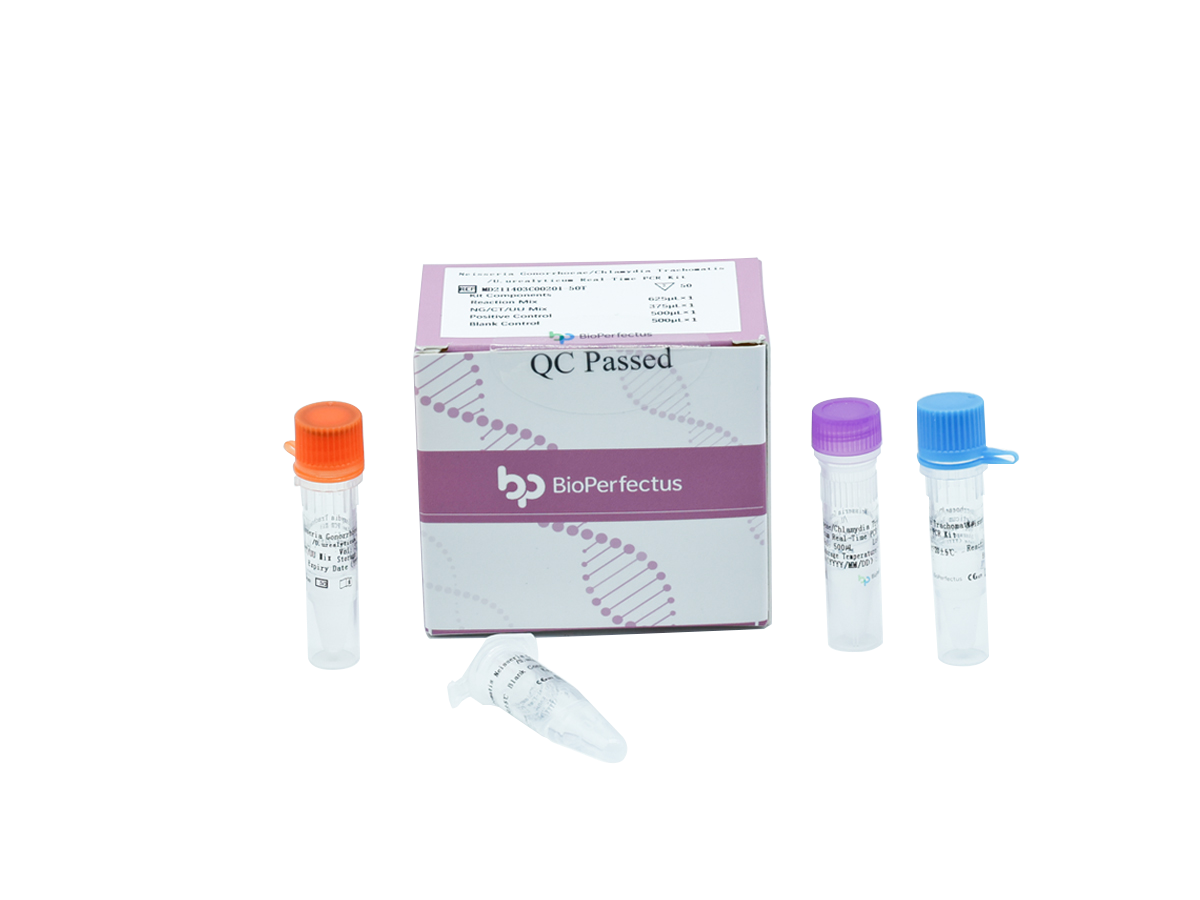
Testing for UU, CT and NG is combined in the BioPerfectus Neisseria gonorrhoeae/Chlamydia trachomatis/U. urealyticum Real-Time PCR Kit through nucleic acid detection. Its coverage gives the programme a specific set of pathogen observations to request. Those names also let the programme connect each reported observation with its organism target.
Comparisons between reporting periods also need a stable description of the examination. Adding a target, accepting another material or changing the participating submissions alters the information available for comparison. Recording those changes preserves the basis of the dataset instead of attributing every difference in findings to a change in infection frequency.
An organism-specific proportion also needs a matching denominator for completed examinations. Requests that were not examined for that organism cannot be counted as negative results for it, and unresolved examinations need a status. Distinguishing completed target findings from pending or unperformed work makes the programme’s summary describe its actual laboratory observations, without presenting a submission total as if every specimen received the same investigation.
Match the Three-Target Examination to Its Specimen and Process
The specimen route supplies the physical connection between the assigned investigation and amplification. Male urethral swabs, female cervical swabs and urine are distinct submissions, so their identities remain relevant through preparation. Material accepted for one route cannot acquire another route’s handling conditions merely because the requested organisms are unchanged.
Those three specimen categories are supported by the BioPerfectus panel. Human β-globin serves as an internal control for sample and process quality. The control contributes evidence about the procedure, while the pathogen observations address the organisms requested; the two kinds of information have different interpretation duties.
Real-time PCR examines selected nucleic acid sequences through amplification and detection. The resulting observation belongs to the target and material tested. Clinical assessment can consider that evidence alongside other information, without treating a molecular target finding as a complete explanation of every symptom associated with the request.
Keep the Laboratory Contribution Clear in Either Setting
Use of an STD Test Kit for UU/CT/NG can now be tied to a named examination rather than an institution-wide claim of comprehensive screening. Clinical work needs the requested findings for the submitted specimen. Programme work also needs consistent definitions for the observations included in its records.
A laboratory introducing an STD screening kit can assess representative accepted material, the proposed preparation and the required result review together. Unresolved combinations remain identifiable during implementation. Evidence for that local arrangement is more informative than an assumption that all methods sharing the PCR label operate interchangeably.
Multiple mainstream real-time PCR instruments are compatible with the BioPerfectus product, leaving the particular programme and operating configuration to be established for the intended procedure. Report release still depends on the method’s acceptance and interpretation requirements. An available instrument is one resource within that assignment.
Clinical requests require specimen-specific findings; public health programmes need observations that fit their reporting population. The panel’s three-target scope remains the same in either setting, and findings outside that scope require another examination. The selection decision identifies exactly which part of the institution’s testing assignment this panel will perform.